Choosing a die spring standard sounds simple until a tooling project crosses borders. One customer wants replacement convenience, another wants consistency with an existing mold library, and the engineering team is focused on fit, stroke, and reliability. In export tooling work, the right answer is rarely “just pick the strongest spring in the catalog.” A better decision comes from matching the spring standard to the tooling system, service expectations, and the actual operating environment.
If you are comparing die springs for an overseas project, the first step is to think beyond nominal size. You need a spring family that supports the tool layout, fits the required working stroke, and still makes sense for maintenance, replacement, and future sourcing.
Why die spring standards matter in export tooling
In tooling projects, the standard affects much more than part naming. It can influence design assumptions, purchasing habits, service planning, and how easily the customer can maintain the mold after installation. That is especially true in export programs where engineering, procurement, and maintenance may all operate in different regions.
- The standard influences what dimensions and force ranges the customer expects.
- It affects whether replacement springs are easy to understand and reorder later.
- It can change how smoothly the spring fits into an existing mold design.
- It may determine whether a standard spring is enough or whether a custom route is more practical.
That is why buyers should treat standard selection as an engineering and supply decision, not just a catalog filter.
JIS and US die springs are similar, but not interchangeable by assumption
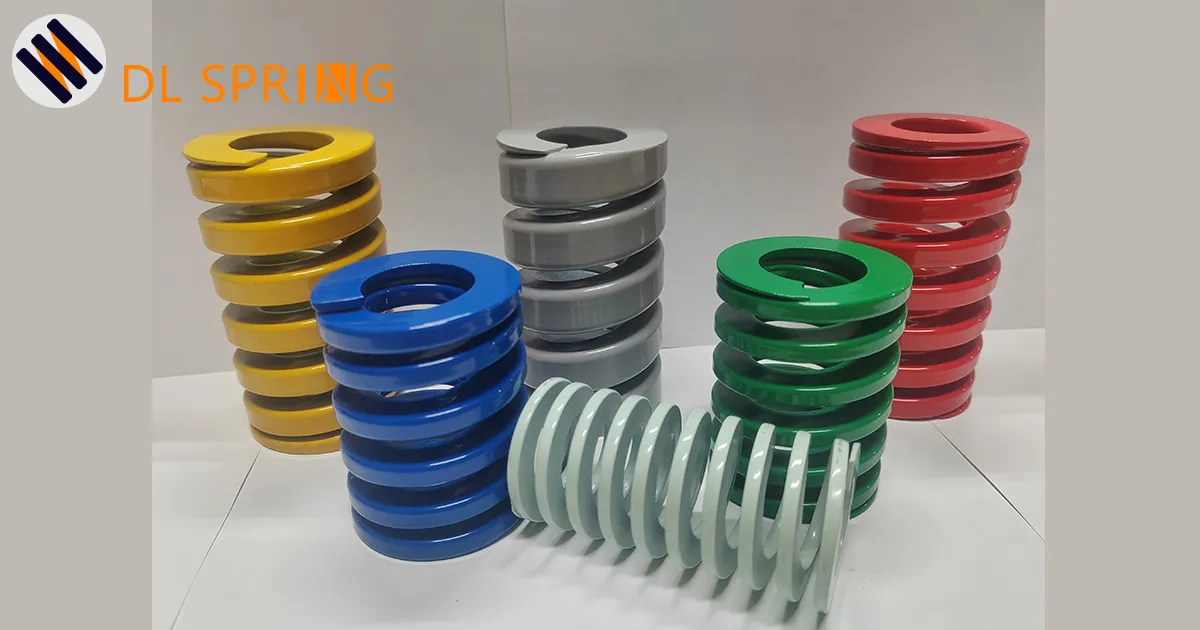
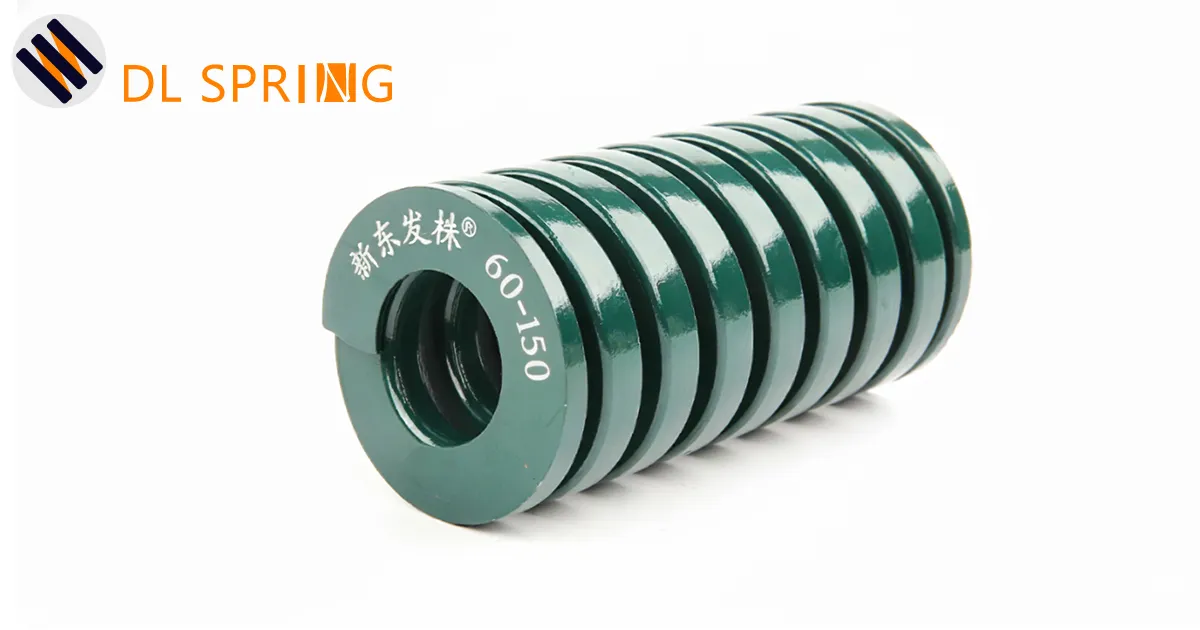
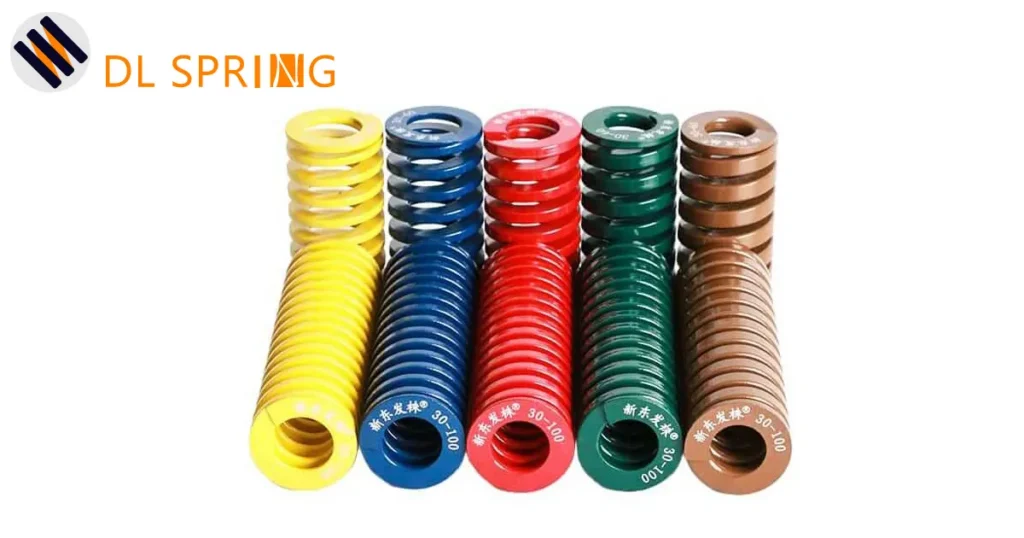
For many overseas projects, the most common comparison is between JIS die springs and US die springs. Both are designed for mold and die applications where controlled force and repeatable movement matter, but they are not interchangeable simply because they look similar in a product image.
The real question is not “Which standard is better?” The real question is “Which standard is better for this customer, this mold program, and this replacement environment?”
| Decision point | JIS-oriented projects | US-oriented projects |
|---|---|---|
| Typical priority | Continuity with existing tooling practices | Convenience for service and replacement habits |
| Engineering focus | Matching a known mold design framework | Aligning with the customer’s installed tooling environment |
| Procurement focus | Series consistency across repeat projects | Operational familiarity and easier aftermarket support |
| Main risk | Assuming a familiar standard always fits a new application | Assuming apparent size similarity guarantees replacement compatibility |
Start with the application, not the catalog
A strong selection process starts with the mold, not the product list. Before choosing any spring series, confirm the working conditions. This is where many export projects either stay efficient or become expensive later.
- What is the working stroke, and how much safety margin is needed?
- How limited is the installation space inside the mold?
- Will the spring operate under high-cycle production conditions?
- Does the end customer already standardize around one die spring system?
- Will replacement need to happen locally, quickly, and without engineering review?
If the mold layout is tight, the cycle frequency is high, or the customer has strict replacement habits, standard choice becomes more than a preference. It becomes part of the tooling strategy.
Replacement planning should influence your decision early
One of the most overlooked issues in export tooling is replacement logic. A die spring may work perfectly in the original build, but if the customer struggles to identify a matching replacement later, the project becomes harder to support. That creates unnecessary friction for both the mold user and the supplier.
For that reason, spring selection should account for what happens after delivery:
- Can the customer clearly recognize the spring family they are using?
- Will the maintenance team reorder by standard, by drawing, or by supplier record?
- Is the customer likely to need catalog replacement or drawing-based custom support?
This is often where a “good enough” standard choice becomes a poor long-term choice.
Process control matters as much as standard choice
Even if the correct standard family is selected, performance still depends on manufacturing consistency. That is why buyers should not stop at the standard label. Dimensional repeatability, forming quality, and surface condition all affect how reliably a die spring performs in actual tooling motion.
Reviewing the supplier’s spring winding process helps you understand how consistent forming and dimensional control are managed. Looking at surface treatment and aftertreatment helps you judge whether the spring is prepared for real operating conditions rather than only for shipping.
In other words, a correct standard without sound process control is still a weak purchasing decision.
When a custom spring solution is the better option
Some export tooling projects begin with a standard comparison and end with a custom requirement. That is not a problem. It is often the most efficient result.
A custom route makes sense when:
- the installation space does not align well with standard series assumptions,
- the customer requires a particular force or stroke behavior,
- the mold design cannot be adjusted easily around a catalog spring, or
- the project needs better alignment with a drawing or sample than a standard part can provide.
In these cases, moving directly to a custom spring solution can save both engineering time and procurement friction.
A practical selection workflow for export buyers
If you want a faster and safer decision, use this sequence:
- Confirm the mold’s installation space and working motion.
- Check whether the customer already uses a preferred spring standard.
- Consider how maintenance and replacement will happen after delivery.
- Review process capability, not only product naming.
- Choose standard or custom support based on the actual project constraints.
This approach reduces redesign risk and usually leads to a more supportable tooling program.
Frequently Asked Questions
Is JIS or US always the better choice for die springs?
No. The better choice depends on the tooling environment, maintenance expectations, and how the customer will replace springs later.
Can I replace one standard with another if the spring looks similar?
You should not assume interchangeability from appearance alone. Review the application, installation limits, and expected performance before making that decision.
When should I move from a standard die spring to a custom spring?
Choose a custom solution when the mold layout, stroke requirement, or replacement logic does not fit a standard series cleanly.
Why does manufacturing process matter if the standard is already correct?
Because the standard defines the family, but repeatability, forming quality, and finishing still influence real-world tooling performance.
Work With Dingli
Cixi Dili Spring Co., Ltd. has focused on spring manufacturing since 1995 and supports both standard and custom production based on samples or drawings. If you are comparing die spring standards for an export tooling project, you can review die spring options, explore custom spring support, or learn more about Dingli. For direct project discussion, contact [email protected] or WhatsApp +86 13586942004.