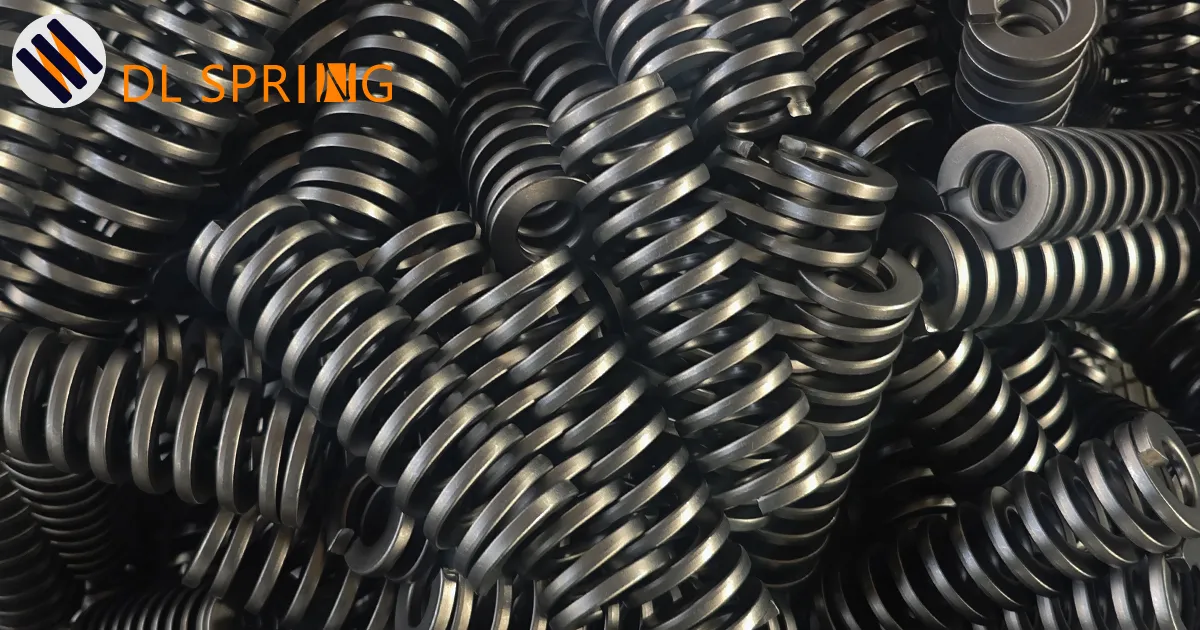
Surface treatment is often discussed too late in a spring project. The buyer focuses on dimensions and force first, then asks for some kind of protective finish near the end. That sequence can create confusion, because the right finishing route depends on the real environment, storage conditions, visual expectations, and how the spring will actually be used.
In humid or mildly corrosive applications, surface treatment is not only about appearance. It influences how well the spring handles transport, storage, handling, and service exposure. A better decision starts by asking what the spring must survive, not by asking which finish sounds most familiar.
If you are comparing spring solutions for equipment, tooling, or industrial assemblies, review the basic product requirement first and then evaluate how surface treatment and aftertreatment support the real application.
Why the environment should drive the finishing decision
A spring used in a dry indoor machine does not face the same risk as one stored in humid packaging, exposed to washdown conditions, or installed near corrosive media. Yet many RFQs only say “please add anti-rust treatment” without describing the actual environment.
- Humidity level affects corrosion risk during storage and use.
- Handling and transport may matter even before installation.
- Outdoor or semi-protected applications usually need more than appearance-driven finishing.
- Clean-looking parts are not automatically well-matched to the real service environment.
This is why surface treatment should be selected from the application backward. If the environment is unclear, the finishing choice may look acceptable on paper but still be poorly matched in practice.
Start by separating three different requirements
One of the most useful ways to choose a surface treatment is to separate the need into three questions. Buyers often combine them into one, but they are not the same.
1. Is the goal corrosion protection?
If the spring will face moisture, condensation, or a harsher atmosphere, corrosion protection becomes the main concern.
2. Is the goal visual consistency?
Some projects care about cleaner appearance, color consistency, or a more controlled delivered look. That does not always mean the same finish needed for a harsher environment.
3. Is the goal process compatibility?
In some cases, the finishing decision must also fit later assembly, packaging, inspection, or product-identification needs.
Once these three questions are separated, the supplier can give more useful guidance and avoid treating every “anti-rust” request as if it were the same engineering problem.
What buyers should describe before asking for a finish recommendation
A manufacturer can only recommend a reasonable treatment if the project context is clear enough. Before asking for a surface-treatment recommendation, prepare these points:
- where the spring will operate: indoor, humid, outdoor, enclosed, or exposed
- whether the risk appears during storage, shipping, or service life
- whether appearance matters for the visible final product
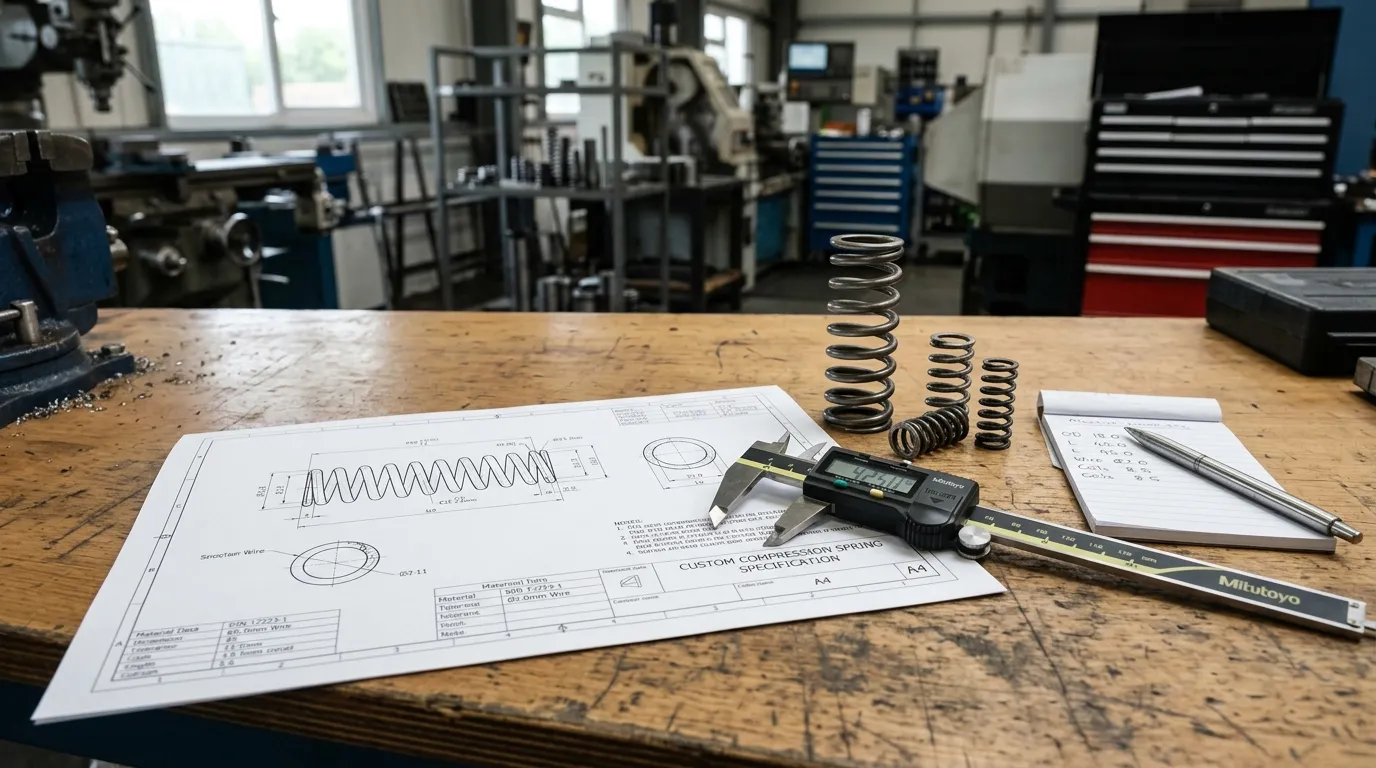
- whether the spring is a standard purchase or part of a custom spring project
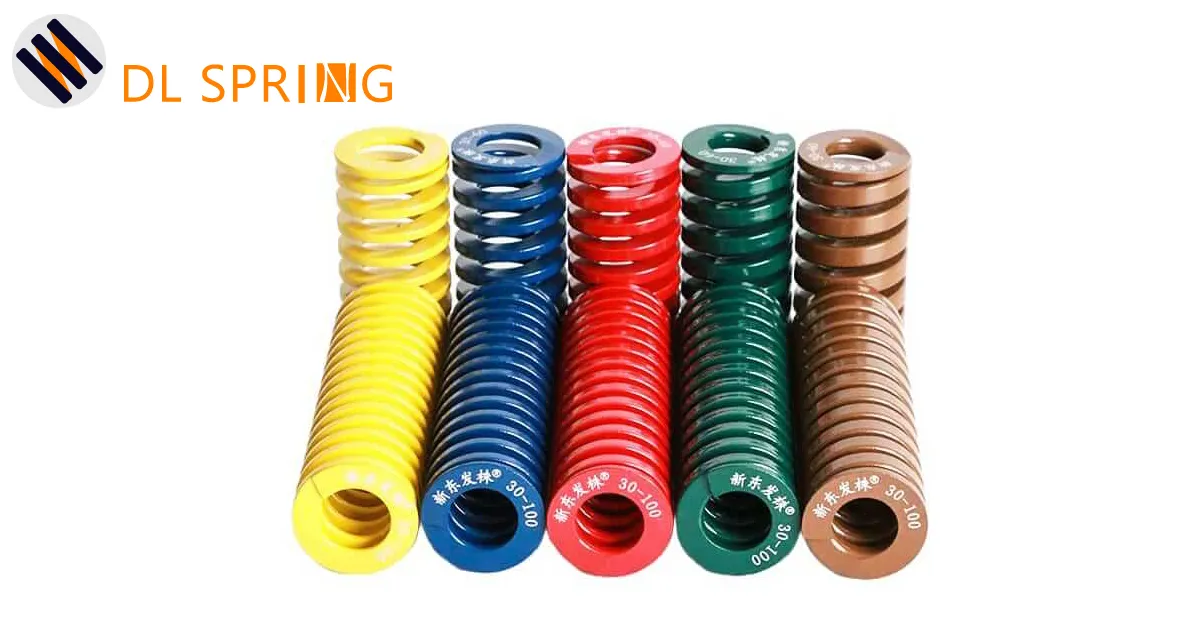
- whether replacement convenience or visual identification matters later
These details do not need to be long, but they need to be real. A short environmental description is more helpful than a generic request for “best protection.”
Do not treat surface treatment as a separate issue from manufacturing quality
It is easy to speak about finishing as if it were an isolated layer added at the end. In reality, finishing quality depends on the overall production route. The spring still needs sound forming, stable dimensions, and controlled production before aftertreatment can do its job properly.
That is why it helps to review both the supplier’s finishing approach and the upstream spring winding process. A suitable finish on a poorly controlled spring is still a weak purchasing decision.
For buyers sourcing across multiple spring types from the same supplier, it can also help to compare which finishing logic fits the broader product range instead of evaluating one isolated part without context.
Common mistakes when choosing treatment for humid or corrosive conditions
Several recurring mistakes show up in RFQs and supplier discussions:
- asking for the cheapest finish without describing the environment
- assuming appearance and corrosion resistance are the same requirement
- focusing on the finish name instead of the actual use condition
- adding the finishing discussion only after the spring geometry has already been locked
- assuming that a spring only needs protection during service, not during storage and shipment
These mistakes usually lead to one of two outcomes: unnecessary over-specification or a finish that looks acceptable at delivery but does not align with the real use case.
A practical decision sequence for buyers
If you want a more reliable selection workflow, use this order:
- Define the service and storage environment.
- Separate corrosion protection needs from appearance needs.
- Confirm whether the spring is standard or custom-driven.
- Review production consistency, not only finishing terminology.
- Ask the supplier to recommend a route based on the actual use condition.
This approach is more useful than choosing a surface treatment by habit or by catalog wording alone.
Frequently Asked Questions
Can I choose a spring finish based only on appearance?
You can, but it is risky if the spring will face humidity or corrosive exposure. Visual preference and functional protection are not always the same requirement.
Should I discuss surface treatment at the end of the RFQ process?
It is better to raise it early when the environment may affect the recommendation. That gives the supplier more room to align geometry, process, and finishing logic.
Does a protective finish matter if the spring works indoors?
Sometimes yes. Storage, transport, condensation, and maintenance conditions can still influence the decision even when the final application is indoors.
When should I ask for custom support instead of treating it like a standard part question?
If the application environment is unusual, the geometry is constrained, or the spring must match a specific assembly requirement, custom support is often the better route.
Work With Dingli
Cixi Dili Spring Co., Ltd. has focused on spring manufacturing since 1995 and supports both standard and custom production based on samples or drawings. If you need help choosing a spring finishing route for humid or corrosion-sensitive use conditions, review Dingli’s aftertreatment process, explore the spring product range, or start from custom spring support. For project discussion, contact [email protected] or WhatsApp +86 13586942004.