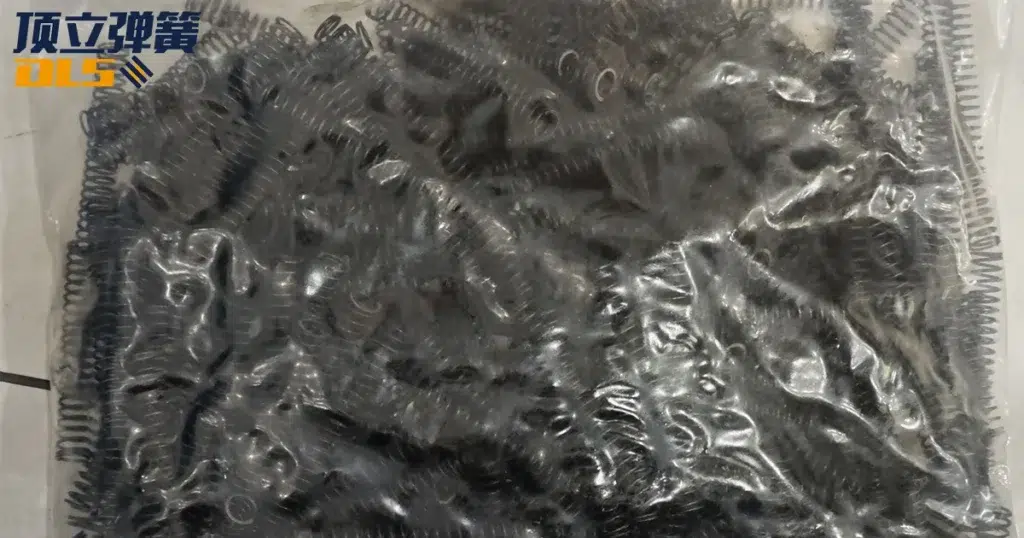
Rust on a delivered spring is one of the most frustrating issues a buyer can find on receiving inspection. The spring left the factory clean, the surface treatment was confirmed, the packing list looked right, and then the box is opened and there are visible spots on the wire. Most buyers immediately blame the supplier’s finishing. In practice, the cause is usually a combination of packaging, humidity exposure during transit, and how the parts were stored after they arrived.
This becomes a bigger issue around the rainy season in coastal Asia, during long ocean transit, and when parts sit in a buyer’s warehouse for months before being installed. A useful conversation starts before the parts ship, not after spots appear.
If you are reviewing a manufacturer’s protection logic, it helps to look at the broader aftertreatment process instead of treating rust prevention as something that happens only in the last packaging step.
Why springs still rust after surface treatment is applied
Surface treatment reduces corrosion risk, but it does not make a spring permanently weatherproof. Several conditions can still cause rust to appear during shipping or long-term storage:
- condensation inside sealed packaging when temperature changes during ocean transit
- oil film thinning out or wiping off during handling and re-packing
- parts stored in humid warehouse zones near doors, washbays, or unconditioned areas
- packaging materials absorbing moisture and holding it against the metal surface
- long storage periods where the original protection was only intended for short transit
None of these are exotic problems. They show up in normal supply chains, and they are usually preventable if both sides agree on the protection level needed for the actual route and storage time.
Separate three different protection windows
It helps to stop thinking of “rust prevention” as one requirement. There are three windows where corrosion can start, and they are not solved by the same action.
1. The factory-to-port window
This is short, usually clean, and the original oil film and inner packaging are intact. Most rust complaints do not start here.
2. The transit window
Ocean shipping involves temperature swings between deck and hold, and humid air in containers. This is where condensation can form on cold metal even inside sealed bags.
3. The buyer-side storage window
Once parts arrive, they may sit for weeks or months. Storage location, packaging condition after the first inspection, and whether the box gets opened and resealed all matter.
A spring that ships in May and gets installed in September is exposed to a different risk profile than one used the same week it arrives.
What actually protects springs in transit
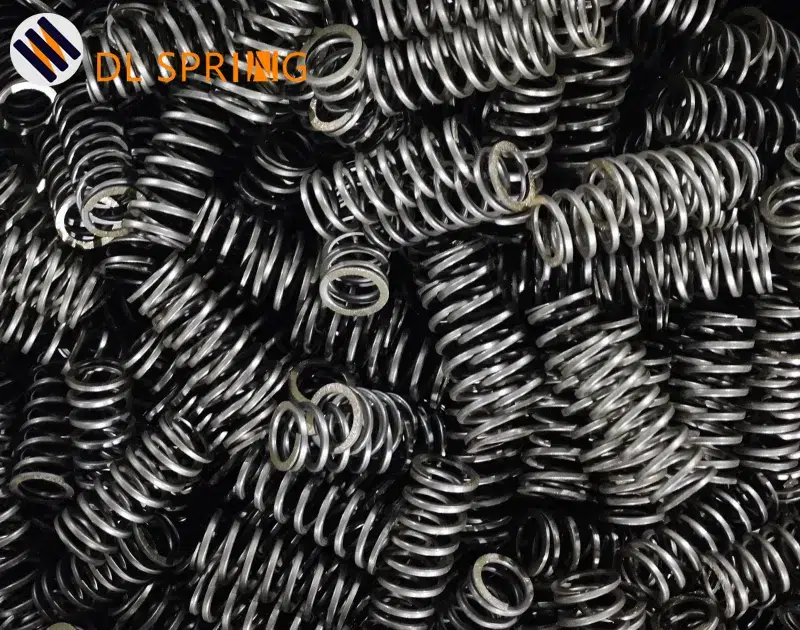
Rust prevention during shipping is built from several layers, not from one thing called “anti-rust oil.” A reasonable protection package usually combines:
- a controlled oil or wax film applied right after the final cleaning step, not just before packing
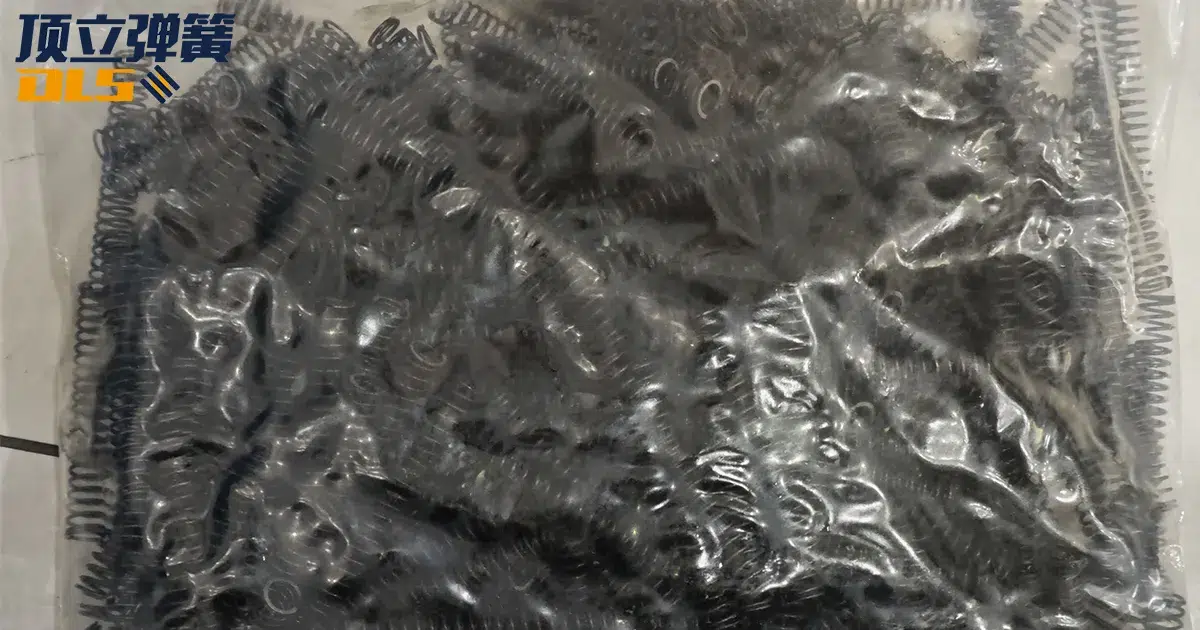
- VCI (vapor corrosion inhibitor) paper or bags for sea freight and longer routes
- desiccant packs sized to the package volume, not a token sachet
- inner packaging that does not press uncoated cardboard directly against the wire surface
- outer packaging that handles stacking pressure without splitting open and exposing inner bags
For carbon steel springs heading into humid environments, VCI material plus a stable oil film tends to outperform either one alone. For stainless steel springs, the focus is more on avoiding contamination from packaging and other steel parts during long storage.
What buyers should confirm before parts ship
Most rust disputes are easier to avoid than to resolve. Before springs leave the supplier, it is worth confirming:
- the destination region and likely transit duration
- whether the parts will be installed quickly or stored for several months
- warehouse conditions on the receiving side, especially in humid seasons
- whether the supplier’s default packaging is for short domestic delivery or for export sea freight
- how the parts should be re-packed after first-article inspection if the box is opened
This kind of context lets the supplier plan a protection level that fits the real route, instead of using a default packaging spec designed for a short truck ride.
Storage practices that quietly cause rust
Even when the supplier did everything reasonably well, storage habits on the buyer side can undo the protection. Common quiet causes:
- opening the original sealed bag to count parts, then closing it loosely without resealing
- storing boxes near doors, loading bays, or unheated zones where humidity swings
- stacking heavy items on top, which crushes the inner packaging and breaks the oil film
- reusing the original carton after the desiccant has already saturated
- mixing carbon steel and stainless springs in the same shelf with no separation
None of these look like obvious mistakes. They become visible only when rust shows up, and by then it is hard to tell whether the issue started in transit or in storage.
What to do when rust appears on receiving inspection
If parts arrive with visible rust, the immediate question is whether the rust is surface-only or whether it has reached the wire. A few practical steps:
- Photograph the packaging condition before opening anything fully. Note any signs of moisture, crushed bags, or saturated desiccant.
- Separate suspected parts and keep them in a dry, ventilated area, not back in the original packaging.
- Check whether the rust pattern is uniform across the lot or limited to specific boxes or layers, since that points to different root causes.
- Share photos and packaging observations with the supplier before deciding on rework, return, or write-off.
If the parts are part of a custom order with critical geometry, also confirm whether cleaning or rework would affect dimensions or fatigue performance. For projects where this risk is significant, it is usually better to plan from the start with the custom spring route in mind, where packaging and protection can be matched to the application.
Connecting rust prevention to manufacturing quality
Rust prevention is not an isolated last step. It depends on how clean the parts are before the oil film is applied, how stable the surface treatment was during production, and whether the packaging is designed for the actual route. Buyers who only ask about the finishing name often miss this.
When evaluating a supplier, it is more useful to look at the full product range and how they handle export packaging across product lines, instead of judging only one box from one shipment.
Frequently Asked Questions
Is anti-rust oil enough for sea freight from China to Europe or North America?
For short routes and quick installation, sometimes yes. For longer transit and storage, it is safer to combine an oil film with VCI material and properly sized desiccant.
Do stainless steel springs need rust prevention during shipping?
Stainless springs are more resistant to general corrosion, but they can still pick up surface staining from contaminated packaging or from contact with carbon steel. Clean separation is usually more important than oil films for stainless parts.
How long can springs be stored after delivery without re-treatment?
It depends on packaging integrity, warehouse humidity, and the original protection. A few months in a stable indoor warehouse is usually fine. Longer storage in humid or unconditioned space should be reviewed case by case.
If the original bag is opened for inspection, is the rest of the lot still protected?
Once the seal is broken, the desiccant and VCI environment lose their effect. The opened portion should be re-sealed properly or stored separately, not relied on for long-term protection.
Work With Dingli
Cixi Dili Spring Co., Ltd. has focused on spring manufacturing since 1995 and supports both standard and custom production for export shipments. If you need help planning rust prevention for a specific route, climate, or storage window, review the aftertreatment process, browse the spring product range, or start a project from custom spring support. For project discussion, contact [email protected] or WhatsApp +86 13586942004.