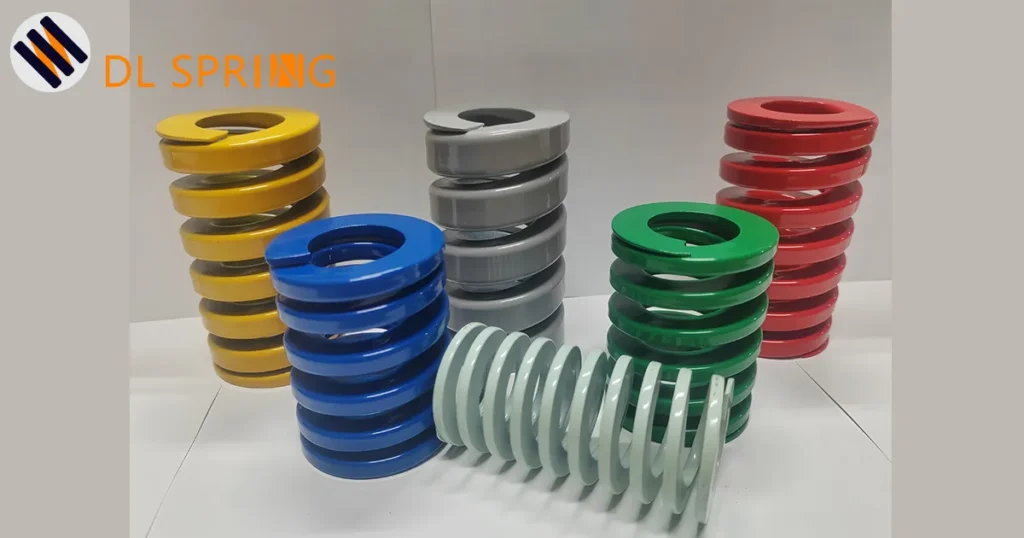
Mid-year tooling maintenance is when most replacement die spring orders are placed, and it is also when the most expensive selection mistakes happen. The shop pulls a worn spring out of a die, sees it is “the green one,” and orders the next box of green springs. The new spring fits the cavity but the press behaves differently — strokes feel softer or more aggressive, parts come out with marks, or springs fail again sooner than expected.
The issue is rarely manufacturing quality. It is that color codes on die springs encode load class, not identity, and the same color from a different supplier can mean a different load rating. Replacing by color alone is faster than measuring, but it only works when the source is consistent.
For tooling teams ordering catalog spares, it is worth keeping the die spring product family reference handy when the original drawing or part number is missing.
What the color on a die spring actually means
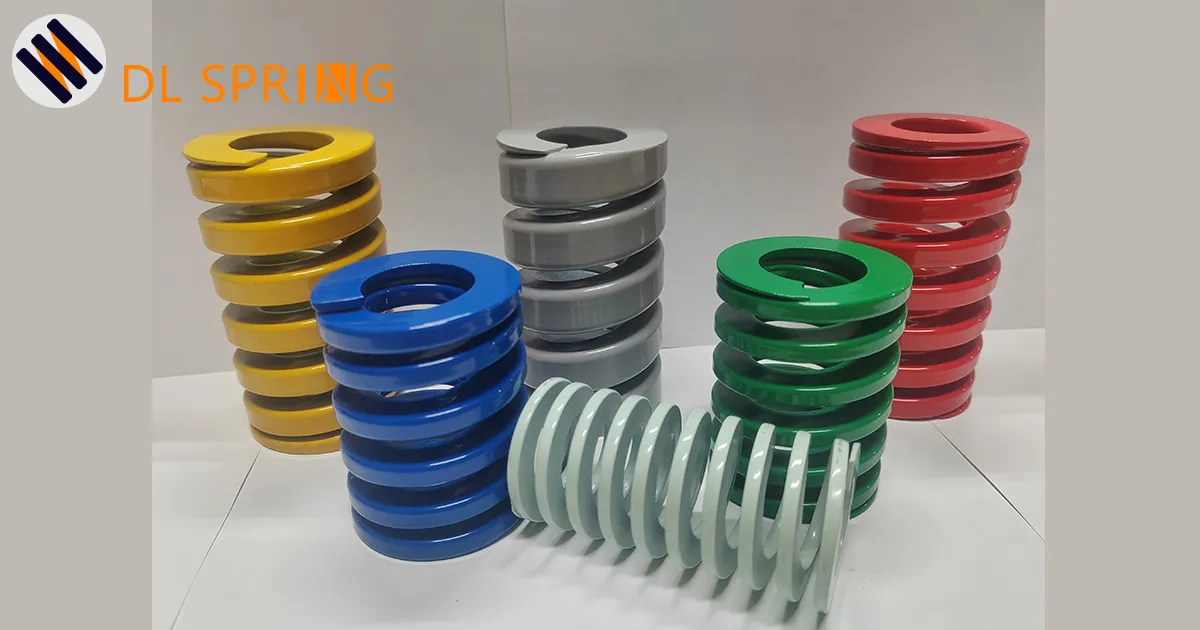
Across the industry, die spring colors typically map to load classes — light, medium, heavy, extra-heavy, and so on. The widely referenced ISO 10243 standard defines a color and load relationship, and major manufacturers align with that scheme. But two important caveats:
- not every supplier follows ISO 10243 exactly; some catalogs follow JIS or proprietary color schemes
- even within ISO 10243, the load value is per spring dimension, so a “green” spring at 25 mm diameter has a very different load rating than a “green” spring at 40 mm diameter
So “green = medium load” is not a universal lookup; it is a class label that depends on the standard and the dimension.
What you actually need to specify a replacement
Three pieces of information together identify the spring class accurately, regardless of color or supplier:
- outer diameter (measured at the coil, not at any guide hardware)
- free length
- load class per the standard the original spring was specified to (light, medium, heavy, extra-heavy, etc.)
If those three are known, the load curve and recommended deflection range follow. Color confirms the class but does not replace these three values.
How replacement mistakes show up at the press
When a replacement die spring is one class off, the press often reports symptoms that look like other problems:
- too light a class: stripper plate lifts late, parts show marks, springs work past their recommended deflection and fatigue early
- too heavy a class: increased shock, faster wear on guide pins and bushings, more press energy required, sometimes audible difference
- same class but different supplier scheme: load value at the working stroke is slightly different, and the die feels “off” without obvious failure
Each of these can be misread as a tooling problem rather than a spring substitution problem. The earlier discussion in when to replace die springs: reading wear signs before failure covered the maintenance side; this article covers the procurement side of the same workflow.
How to handle a replacement when the original part number is missing
A common situation: the die has been in service for years, and the original spring documentation is gone. Practical steps:
- measure outer diameter and free length on a representative new or lightly used spring, not a fully fatigued one
- note the color but verify which standard the supplier uses
- compare the inferred load class against the press operation: was the previous setup behaving correctly, or had it already been compensated for spring drift?
- where possible, identify the original supplier’s part number by stamp or by matching the catalog
If there is doubt about whether the existing setup is correct, it is worth treating the replacement order as a chance to recalibrate rather than reproducing a setup that was already drifting.
Cross-supplier color and standard mapping is not a free lookup
It is tempting to find a “color cross reference table” online and trust it. The problem is that even when colors map across catalogs in principle, exact load values may differ at the same dimension. For projects where load consistency matters (precision stamping, medical, automotive), the safe approach is:
- standardize on one supplier’s color scheme for the tooling shop
- document the color and class mapping in the maintenance manual
- cross-check load values with catalog data, not just color, when switching suppliers
Mixing suppliers without doing this leads to slow drift in tool behavior that nobody traces back to the spring substitution.
When the replacement should not be an exact replacement
Sometimes the original spring class is no longer the right answer. If the die has been modified, the press has changed, or the part being produced is different, the replacement is a chance to revisit the design rather than match a legacy choice. Specific triggers:
- the original spring repeatedly fails earlier than expected — likely overstressed, consider one class up
- the press behavior has been complained about for years — current setup may be a workaround, not a baseline
- the die or tooling has been reground or modified — geometry change can affect required spring force
In these cases the conversation shifts from catalog matching to a brief design review, and the right partner question is “what should this spring be,” not “where do I get this exact part.”
Frequently Asked Questions
Is ISO 10243 universally followed?
It is the most widely referenced standard, but not every supplier follows it precisely. Always confirm the standard alongside the color when ordering across regions or catalogs.
Can I replace a JIS-spec die spring with an ISO-spec one of the same color?
Sometimes the dimensions and load classes line up; often they do not. Cross-check both dimensions and load values, not just color.
How do I know what color class my current die uses?
Pull a spring, check the color and any markings, and match against the supplier’s catalog. If unmarked, measure dimensions and infer the class from load curves.
Should I always go one class heavier when in doubt?
Not automatically. Heavier-than-needed springs increase press shock, accelerate guide wear, and can damage parts. The right class is the one that matches the application, not the safest-feeling one.
Work With Dingli
Cixi Dili Spring Co., Ltd. has supplied die springs to tooling shops since 1995, including ISO 10243 and JIS-style color and load class products. If you are scoping a mid-year replacement order, look at the die spring family, the available product range, or scope a tailored project from custom spring support. To discuss a specific replacement spec, contact [email protected] or WhatsApp +86 13586942004.