A useful spring manufacturing process begins with a defined requirement and ends with evidence that the finished part meets it. For an engineer or buyer, watching wire become a coil is only part of the picture. The order also needs a material specification, suitable end geometry, an agreed processing route and inspection conditions tied to the application.
Dingli Spring's new shop-floor footage shows round wire being coiled, cut and separated. Dingli Spring has confirmed the wire material as 65Mn spring steel. This article uses that short sequence to explain forming, then follows the questions a buyer should resolve before approving a custom spring. The footage does not provide measured dimensions or a finished-part test report; those belong in the drawing and inspection records.
Start the spring manufacturing process with clear requirements
Start with what the spring must do and where it will operate. A compression spring inside a guided assembly needs more than a free length and an outside diameter. The supplier needs to understand the working heights, required forces, available space and the mating parts. A clear drawing revision gives engineering, purchasing and inspection a shared reference.
Keep material grade and wire condition separate. The designation 65Mn identifies the grade; it does not by itself specify the wire's delivery condition, surface condition or the finished spring's properties. Record the required wire diameter, tolerances and traceability documents. If an alternative grade is proposed, discuss the differences and approval evidence rather than treating grade names as interchangeable.
| Requirement | Information to agree |
|---|---|
| Function and installation | Working heights or travel, required forces, available space and guidance |
| Material and wire | Grade, wire diameter and tolerance, delivery condition, surface requirements and traceability |
| Part geometry | Outside or inside diameter, free length, coil count, end configuration and mating dimensions |
| Service and acceptance | Frequency, temperature, media, corrosion exposure, quantity and inspection requirements |
A reference sample can clarify the end configuration and fit, but a used spring may have wear or permanent set. Identify whether the sample represents the original design or a service problem. If it conflicts with the drawing, resolve that conflict before sampling. Otherwise a quotation may cover a different requirement from the one the assembly actually needs.
Read the coiling footage as a forming sequence
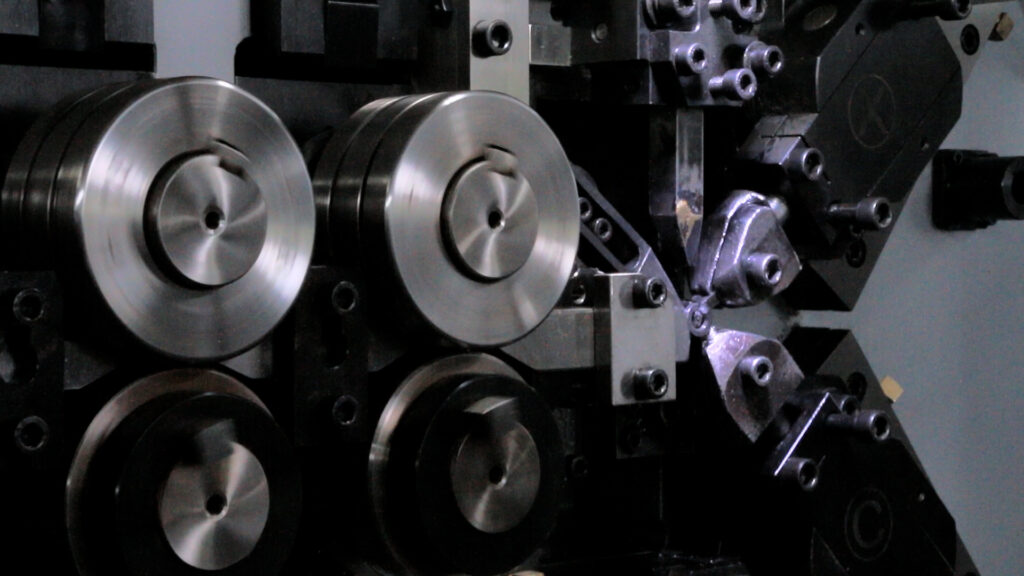
In the clip, rotating feed rollers move wire toward the forming area. Guides establish its path, while forming tools bend it into coils. Pitch control establishes the axial spacing between adjacent turns as the spring body develops. Cut-off separates the formed part from the continuous wire. These functions work together to produce the intended geometry.
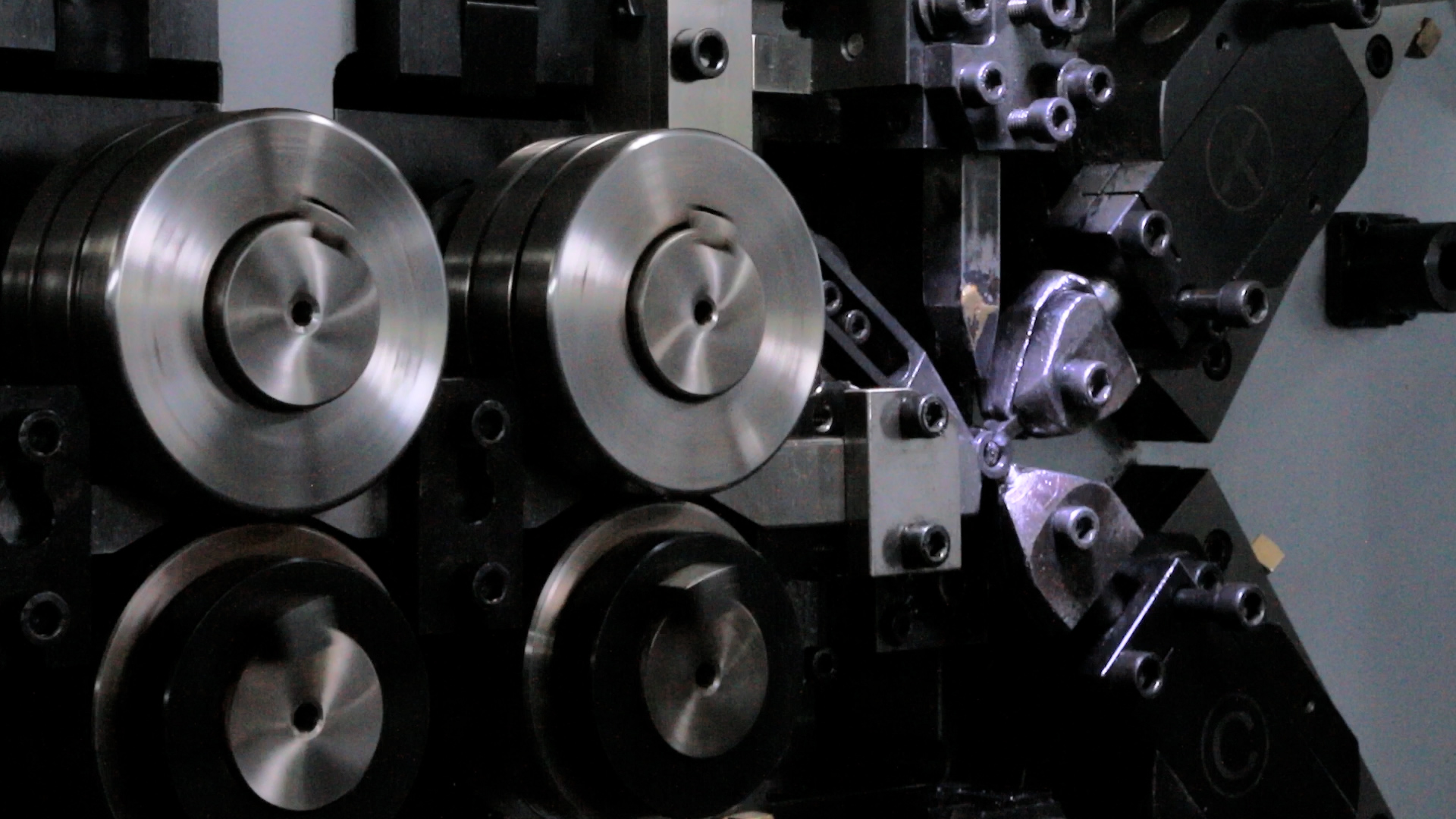
For a buyer, the useful question is how these functions support the drawing. Diameter, pitch, coil count and ends must be considered together. The forming setup also depends on the wire condition and tooling. The clip helps explain the sequence, while sample measurements and production records establish whether the resulting parts meet the agreed tolerances.
Our spring winding process page provides more manufacturing context. When discussing a new order, begin with the part geometry and operating requirements. Machine settings alone do not describe the product you need or the evidence required to accept it.
Connect coil geometry with the installation
Wire diameter describes the round cross-section. Outside diameter determines the outer envelope, and inside diameter matters when a guide rod passes through the spring. Free length is the axial length without an external load. For nominal uniform round-wire geometry, inside diameter equals outside diameter minus twice the wire diameter; actual fit must account for the finished dimensions and their tolerances.
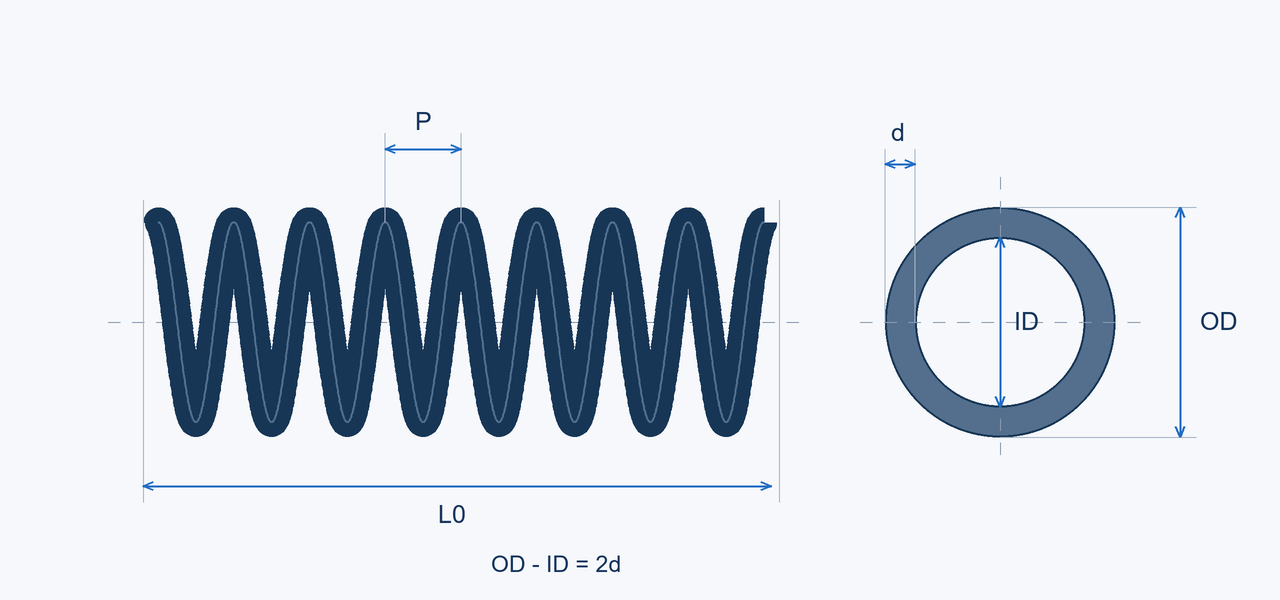
Total coils and active coils are different quantities. Active coils are the portion that contributes to deflection, and their count depends on the end configuration. Do not apply a fixed subtraction to every design. Pitch is measured between coil centerlines, rather than between the nearest wire surfaces; the ends may have a different pitch from the body.
Confirm clearance to a rod or bore and consider the guidance and alignment throughout compression. The working height must suit the assembly as well as the spring. Reviewing compression spring options can help define the basic configuration; restricted space or a particular force requirement may call for a custom design.
Specify the ends as part of the interface
The cut-off animation shows the formed spring separating from the wire. After separation, the cut ends still need to meet the drawing and handling requirements. Check for burrs, sharp edges or end irregularities that could affect seating or assembly. A completed coiling cycle is one manufacturing stage, rather than a complete acceptance result.
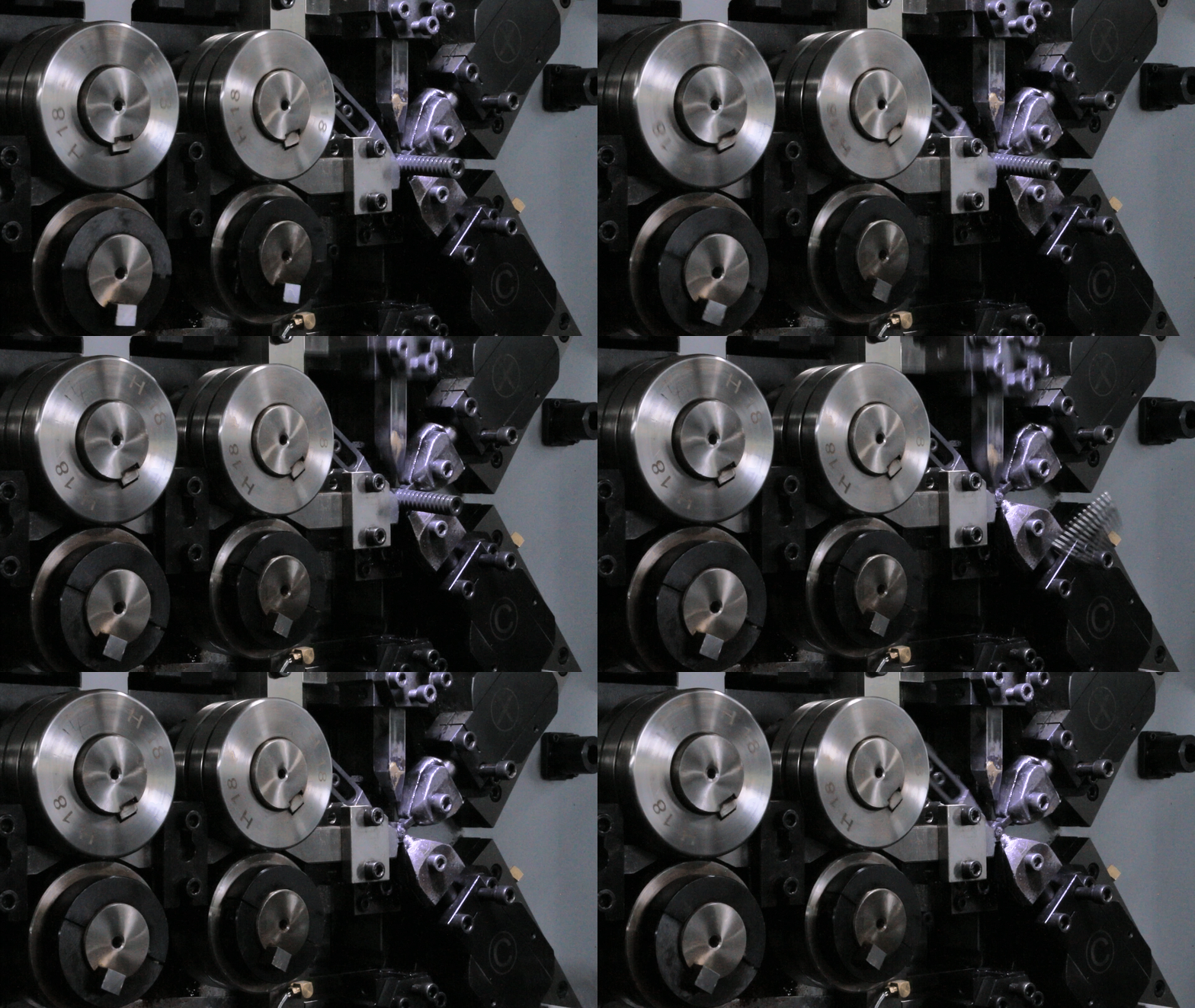
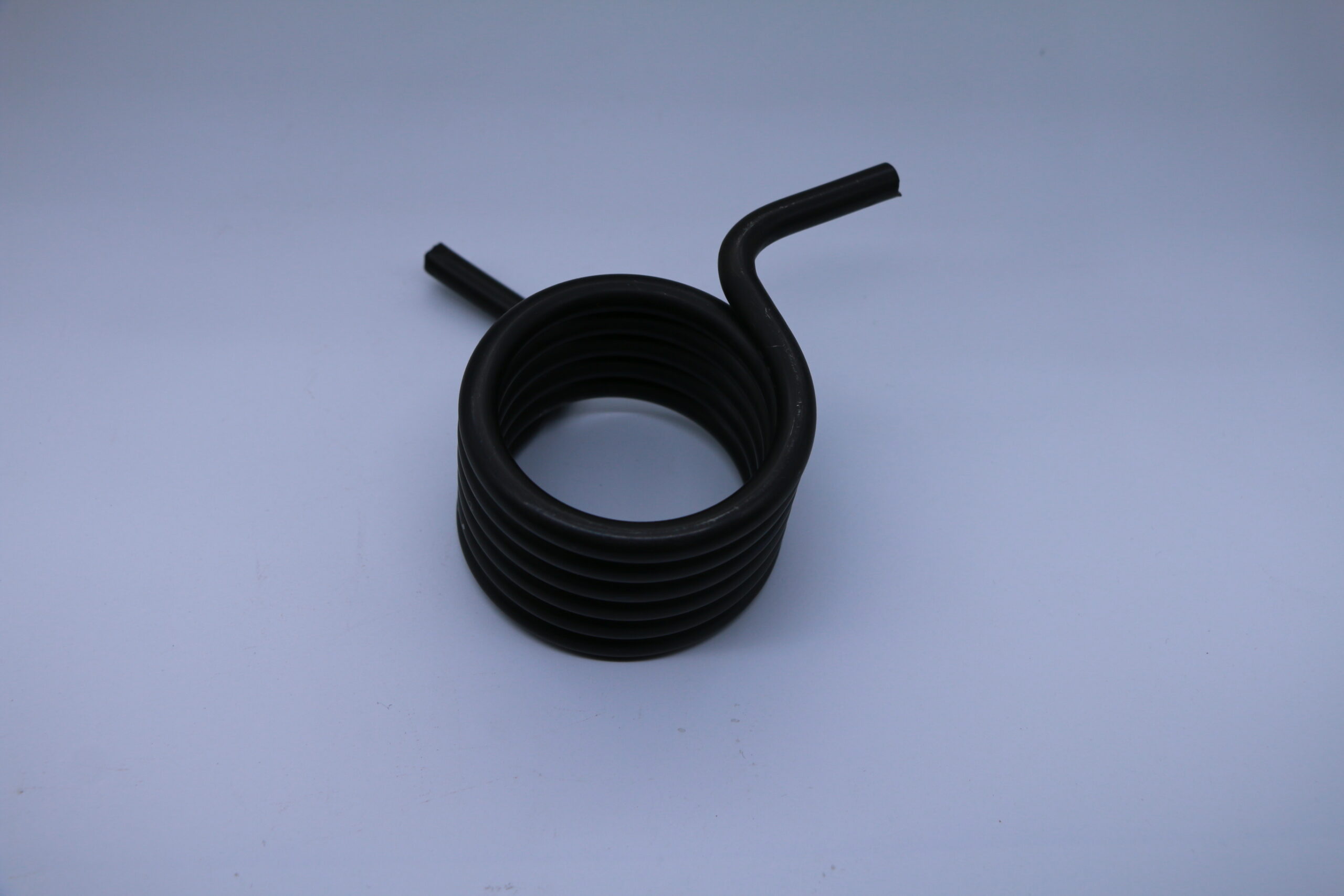
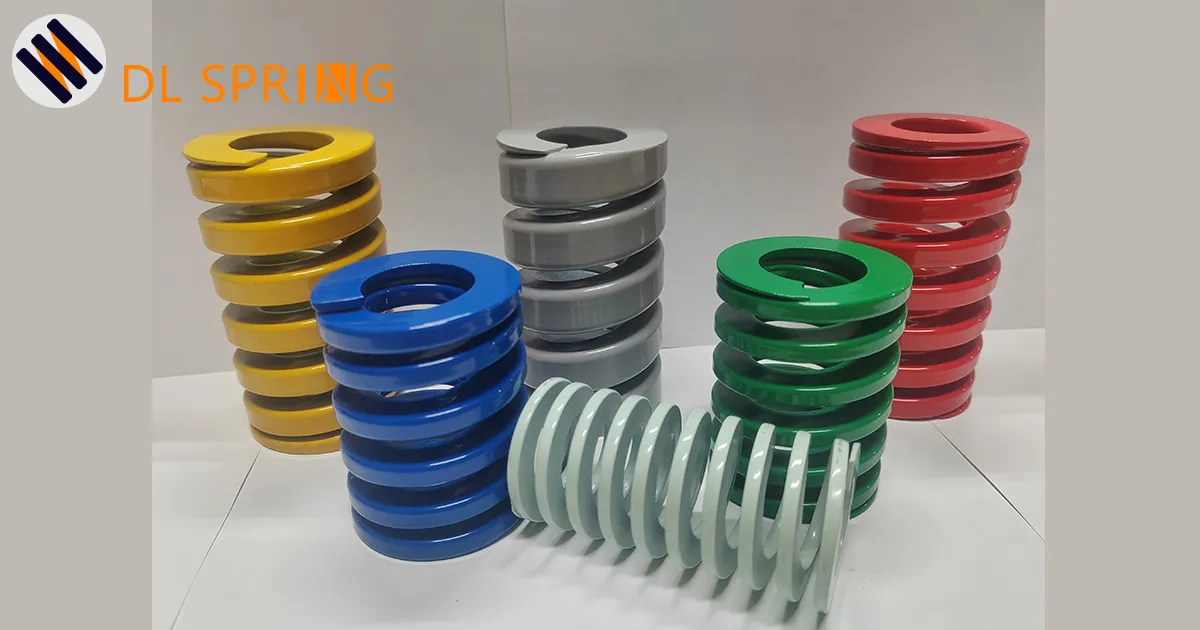
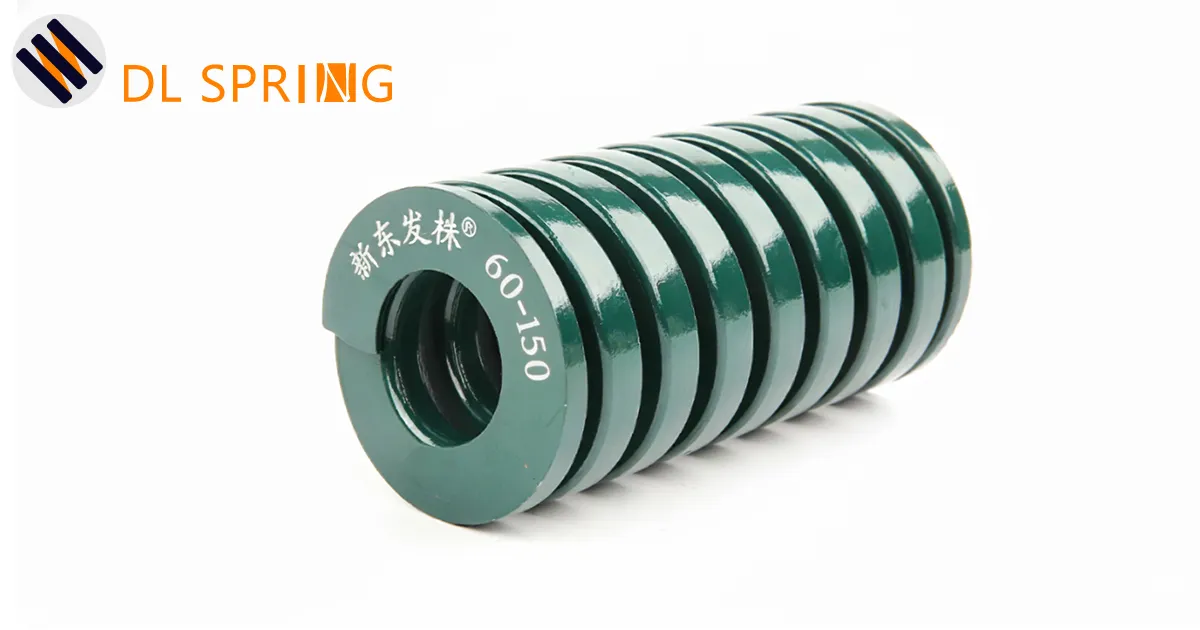
Compression springs can use open or closed ends, with or without grinding. Choose the configuration to suit the supporting surfaces, contact requirements and available space. If ground ends are required, define the relevant end geometry and inspection requirements. A requirement for stable seating should be translated into the drawing, rather than left as an assumption.
End grinding addresses the contact and supporting geometry; it does not replace load verification. A proposed end change should prompt a review of free length, active coils and working positions. Approve the complete effect on the part and its function, especially when a sample is being changed to fit a new assembly.
Choose post-processing from the material condition and application
The footage documents coiling and cut-off. The route after forming depends on the actual condition of the 65Mn wire, the drawing and the required finished state. Applicable stress relief addresses forming-related residual stresses. If the selected material condition requires hardening and tempering to reach the intended state, agree that route and its verification separately. The grade alone cannot identify which route this sample followed.
End finishing, surface treatment and other operations serve different requirements. Corrosion protection during transport is also different from resistance to the service environment. Discuss the media, appearance, mating clearances and acceptance method when a coating or other surface treatment is needed. Include the part's final processed condition in the inspection plan.
For repeated operation, decide whether additional processing and testing are needed from the application requirements. A process name does not establish service life. Dingli Spring can discuss a drawing or reference sample with you; our post-processing information is a starting point for specifying the operations and evidence relevant to your order.
Use dimensions and load checks to answer different questions
Dimensional inspection checks the geometry needed for installation. Load testing checks the force at an agreed working position. These results complement each other. Similar-looking springs can deliver different forces because of material condition, active coils or processing. A spring manufacturing process needs an acceptance plan built around the drawing and the intended function, with records that identify the tested parts.
| Buyer question | Verification item | What the record should identify |
|---|---|---|
| Does the material match the order? | Grade, wire size and delivery or processed condition | Material or batch evidence linked to the spring batch |
| Will the part fit? | Diameters, free length, ends and specified geometric features | Measurement method, results and applicable tolerances |
| Is the force suitable at the working position? | Load at specified heights or deflections | Test positions, conditions, acceptable range and decision basis |
| Are the agreed service requirements supported? | Surface condition and application-specific repeated-operation testing | Test conditions, samples, results and limits of the conclusion |
For a compression spring, specify the test height alongside each load value. If several positions matter, list their heights and acceptable force ranges. Keep the test conditions and evaluation method consistent. Spring rate describes the change in force with deflection within a linear operating region; near coil contact or with variable-pitch designs, assess the actual load-deflection relationship.
Fatigue, permanent-set or other validation should reflect the intended service and an agreed test plan. Define the cycling range, frequency, environment and acceptance conditions as applicable. Neither a short video nor a passing initial load check demonstrates service life. Linking results to samples or batches makes later purchasing decisions, design changes and problem analysis more useful.
Prepare an RFQ that carries through to acceptance
Send the current drawing revision or sample information, installation envelope, working heights or travel, load points, environment and expected quantity. Add the inspections and documents needed for approval. Where a requirement is unresolved, identify the question and agree a sampling plan. This connects the RFQ, spring manufacturing process and eventual acceptance check to the same technical basis.
If 65Mn is specified, retain the exact grade designation and provide the known material or finished-condition requirements. If material selection remains open, start with the application. Explain whether a reference sample is new or used. Our custom spring service can help organize this discussion before sample approval and production.
Frequently asked questions
Does round wire identify the spring material?
No. Round wire describes the cross-section. The filmed wire is 65Mn spring steel, as confirmed by Dingli Spring, but another application may need a different grade or condition. Confirm the material specification, delivery condition and required finished state separately.
Is a spring ready for delivery immediately after coiling?
That depends on the agreed route. Applicable heat treatment, end finishing, surface treatment and inspection follow the material condition and drawing. This footage confirms forming and cut-off; production records are needed to identify the sample's actual post-processing.
Do all compression springs need closed and ground ends?
No. Select the ends for the supporting surfaces, contact arrangement and installation space. Where grinding is specified, define the relevant geometric requirements and inspect them. The finished spring still needs to meet the agreed load requirements.
Why specify a height with a compression spring load?
Force changes as the spring is compressed. A load value without a test position is incomplete for verification. State the height or clearly defined deflection, acceptable force range and testing conditions so both parties evaluate the same requirement.
What should a buyer supply for a custom spring quotation?
Provide a drawing or sample, working positions and loads, installation constraints, environment, quantity and acceptance needs. Identify the drawing revision and sample condition. Agree unresolved material or inspection questions before approving the sample.
Discuss your round-wire spring requirements with Dingli Spring
Cixi Dili Spring Co., Ltd. has manufactured springs since 1995. Send your drawing or sample information with the material, working conditions, load points and expected quantity. We can discuss forming, applicable post-processing and acceptance requirements so the order connects a defined need with a verifiable finished part.
Email: [email protected]. WhatsApp: +86 13586942004.